The Anatomy of a Snow Route: Why Neighborhood Density Matters for Your Morning Commute
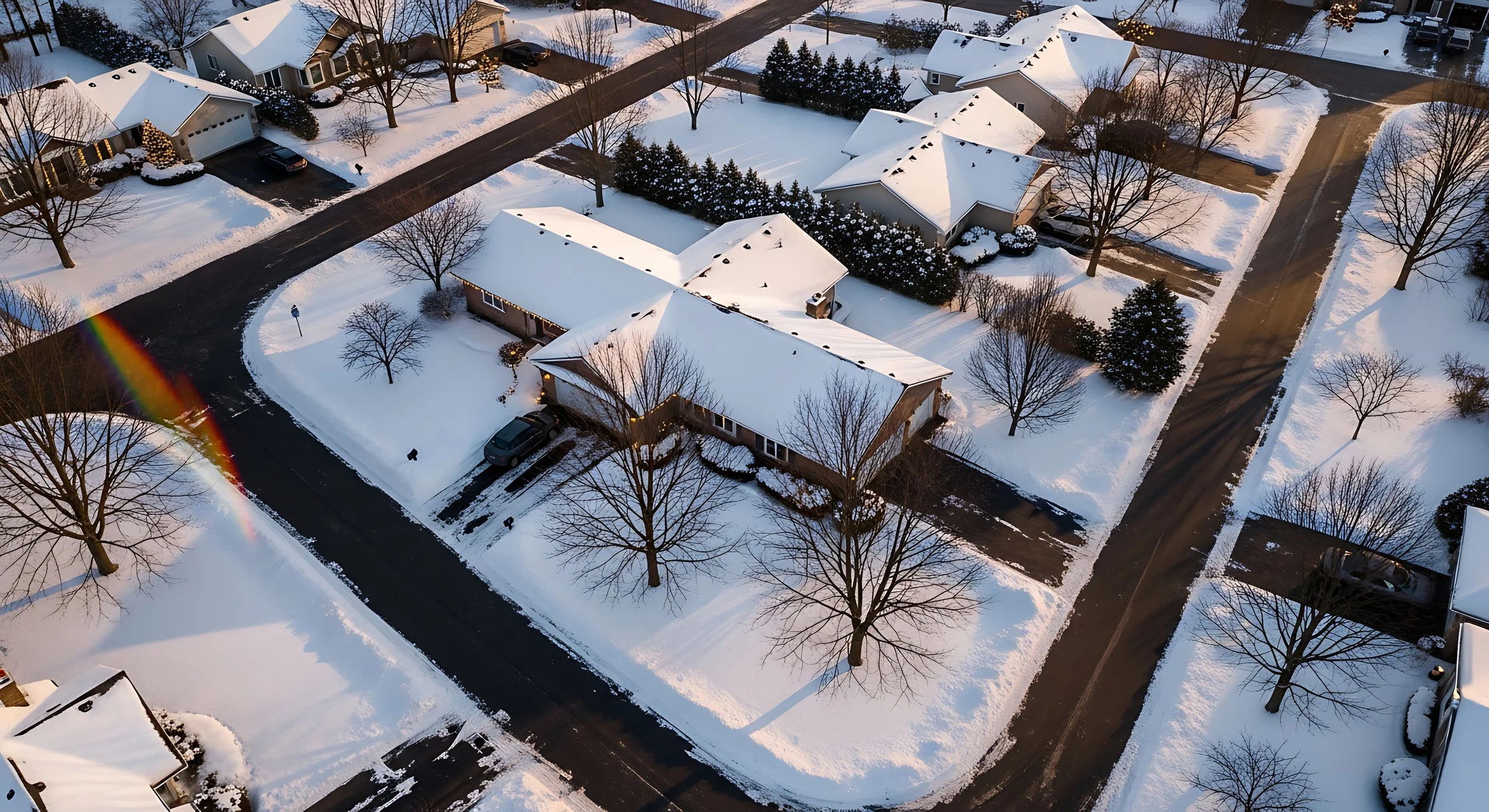
It is 6:30 AM on a Tuesday, and a fresh eight inches of lake effect snow has fallen overnight. You look out the window, sip your coffee, and scan the street. The school bus is scheduled to arrive shortly, your morning commute starts in an hour, and your driveway is still completely blocked. You check your phone, wondering where your snow removal contractor is and if you will make it out in time.
If you currently contract with a traditional snow plow service, this waiting game is likely a familiar winter frustration. The root cause of unpredictable arrival times rarely comes down to a lack of hard work from the driver. Instead, it is a fundamental flaw in how traditional snow routes are designed.
The Problem with Sprawling Routes
Most traditional plow operators run what are known as "sprawling" routes. Because they rely on pickup trucks that can travel at highway speeds, these businesses often accept clients wherever they can find them. A single route might start in Webster, jump over to Penfield, head down to Fairport, and circle back.
On paper, this wide net helps the contractor book more business. On the ground during a blizzard, it is a logistical nightmare.
Transit Overhead: A driver might spend 15 to 20 minutes traveling on unplowed, dangerous main roads just to get from one driveway to the next. That is dead time where no snow is actually being cleared.
The Domino Effect: If a truck encounters a stuck vehicle, gets caught in a traffic delay, or experiences a mechanical failure three towns over, every single client further down the line suffers a massive delay.
The Late-Night Catch-Up: Sprawling routes take longer to complete. If the snow starts falling heavily at 3:00 AM, a sprawling service simply cannot visit every home before the morning rush hour.
The Science of Neighborhood Density
At Northland Snow, we approach routing from a completely different logistical perspective. Instead of chasing isolated properties across the region, we build our entire business model around neighborhood density.
We deliberately restrict our service areas to tight, highly concentrated clusters within Webster and Fairport. If a street or neighborhood does not meet our density requirements, we do not service it.
This hyper-local focus changes the mechanics of winter reliability:
Zero Travel Waste: Because our industrial tractors are stationed right inside the neighborhoods they clear, they move from driveway to driveway in seconds, not minutes.
Predictable Loops: Our operators run highly optimized, short loops. Because they aren’t fighting highway traffic or traveling long distances between jobs, their arrival windows are remarkably consistent and predictable.
Rapid Second Passes: During a prolonged, multi-day storm, a dense route allows our tractors to complete their entire run and quickly double back for clean-up passes, keeping your driveway open throughout the day rather than just once at the end of the storm.
Reliability by Design
When you choose a snow removal provider, you aren't just paying for cleared pavement—you are paying for the reliability of your morning schedule. Traditional plow trucks operating on sprawling routes will always be at the mercy of regional traffic and distance.
By partnering with a service that respects the physics of local density, you secure a spot on a route designed for speed, consistency, and peace of mind when the morning commute matters most.