Your Newly Sealed Driveway in April: Plow Damage vs. Blower Preservation
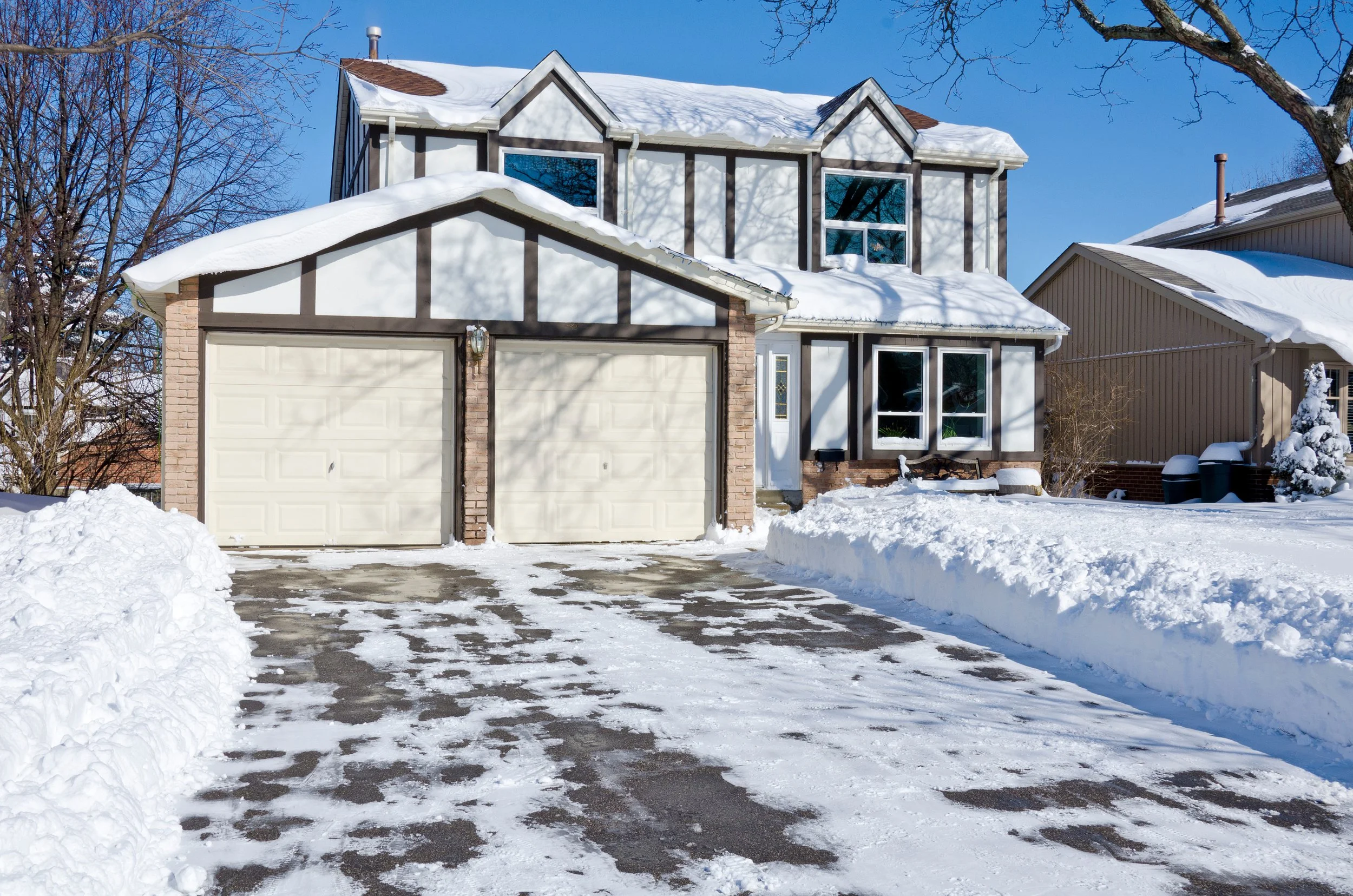
You just spent $500–1,500 getting your driveway sealed before winter. It's a smart investment—a properly sealed driveway lasts 5–7 years instead of 2–3. But by April, that fresh seal either held up or it didn't. And the difference comes down to one thing: what removes the snow.
What Plow Trucks Do to Sealed Asphalt
A steel plow blade weighs hundreds of pounds and creates tremendous downward and backward force as it scrapes across your driveway. That metal edge doesn't just push snow—it drags it, grinding it into your fresh seal with the weight of thousands of pounds per square inch. Each storm means another pass, another drag, another small fracture in the seal you just paid to install. By spring, those microfractures become visible cracks.
The Blower Advantage
Northland uses compact tractors with rear-mounted snow blowers instead of front-mounted plow trucks. The blower scoops snow vertically and throws it into your yard—the snow moves away from the surface, not across it. The poly edges (versus steel) create minimal friction contact. There's no grinding, no drag force working against your seal. The equipment moves snow off, not into, your driveway.
Why Spring Reveals the Difference
Spring thaw shows the damage plow trucks create. As temperatures cycle above and below freezing, water penetrates those new cracks in your seal. Water freezes, expands, cracks widen. A homeowner who sealed their driveway in fall and used a plow service through winter often faces the choice by April: re-seal early (another $500–1,500) or live with accelerated deterioration. A homeowner who used a blower-based service looks at their driveway and sees minimal wear—the seal is intact.
The Math: One Season vs. Five
A sealed driveway is built to last 5–7 years with normal maintenance. Plow damage can cut that to 2–3 years. The cost math is straightforward: invest once in proper equipment, or invest repeatedly in premature re-sealing and patching. One winter of plow damage can cost you as much as two years of the driveway's original lifespan.
What Northland's Approach Preserves
When snow moves off your driveway rather than getting ground into it, your seal stays intact. Spring inspection shows what it should: no new cracks, no signs of accelerated wear. Your investment survives the season the way it was designed to. It's not just about snow removal—it's about protecting what you've already paid to preserve.
Asking the Right Question When Signing Up
The next time you're shopping for snow removal, ask this: do you use a plow truck or a blower? Is your blade steel or poly-edged? What does your equipment do to sealed asphalt?
Some contractors won't have a clear answer. Northland does—because we've built our entire operation around minimizing property damage while maximizing reliability. That's the difference between clearing your driveway and preserving it.